COUNTRY CONTACT NETWORK

Our national representatives connect ecological economics communities across Europe.


**Please note this page is currently under construction, however all country contacts are correct and up to date. **

Austria

Christian Kerschner

christian.kerschner@gmail.com

Belgium

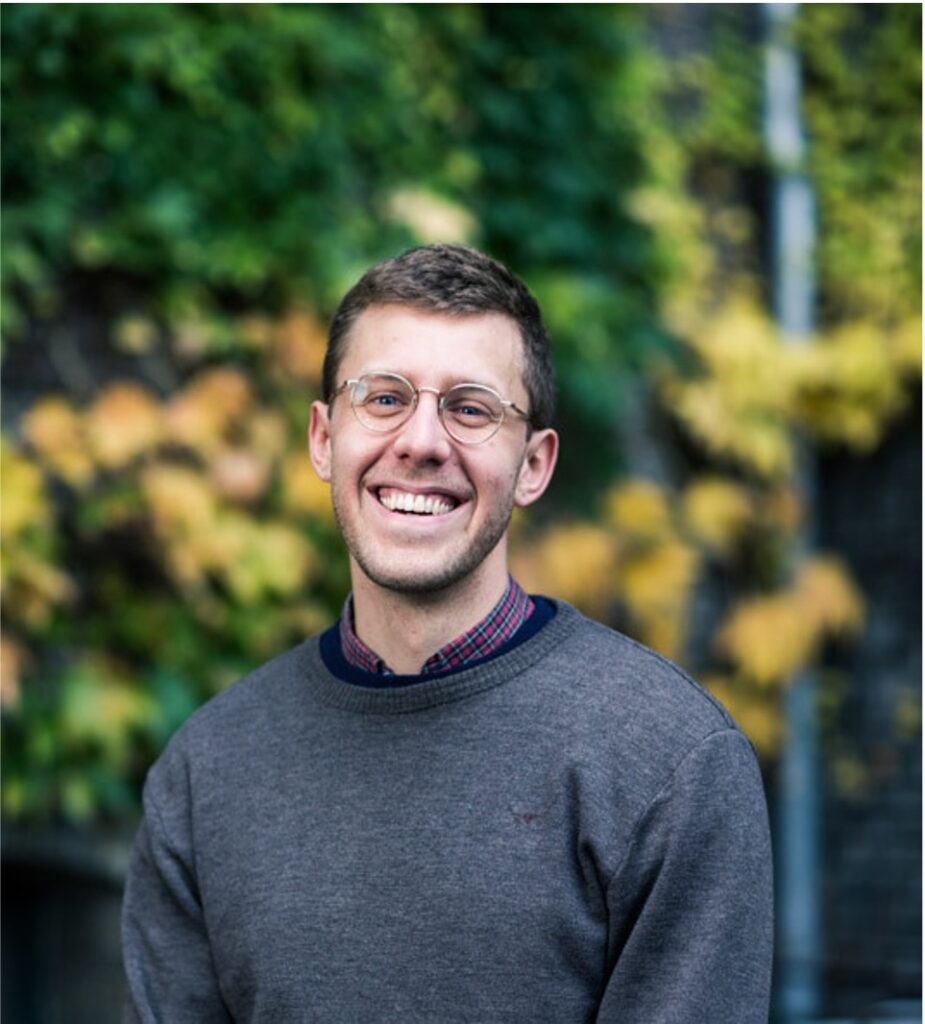
Brent Bleys

Associate Professor, Ghent University

Beyond GDP indicators, subjective well-being, sufficiency measures and post-growth policies. Organiser of ESEE 2026 in Ghent. 

brent.bleys@ughent.be

Croatia

Branko Ancic

branko@idi.hr

Cyprus

Elena V. Amber

PhD Researcher, School of Business, University of Nicosia

Behavioural factors of sustainable consumption and their nexus with impulsive buying behaviour.

elena.v.amber@gmail.com


Denmark

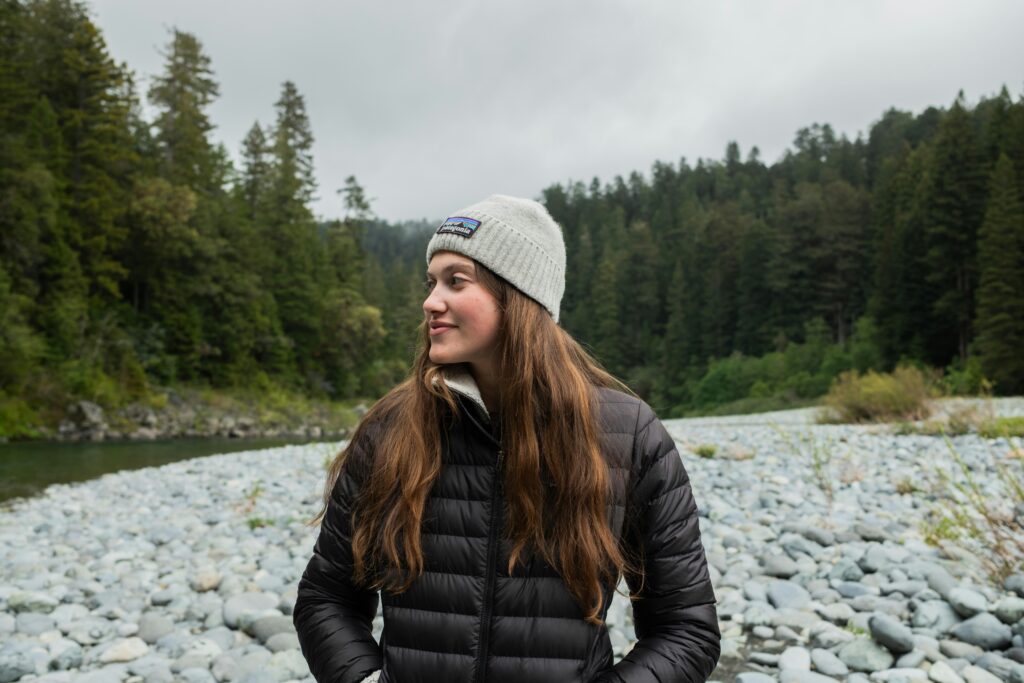
Oskar Wood Hansen

PhD Candidate, Institute of Environmental Science and Technology, Universitat Autonoma de Barcelona (ICTA-UAB)

Climate policy and its links to wider environmental and social issues such as biodiversity and inequality.

oskar.woodhansen@uab.cat

Estonia

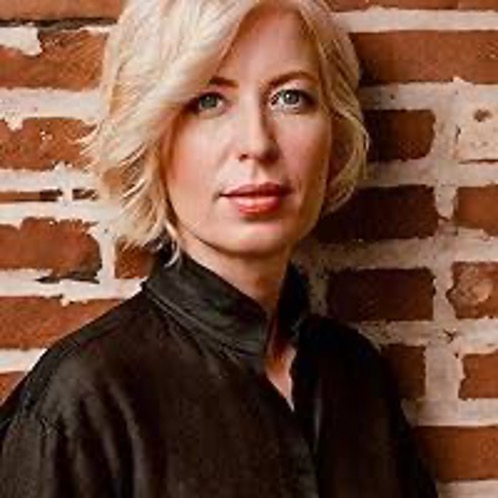
Maiko Mathesen

Co-Founder of Degrowth Estonia; Guest Lecturer, Autonomous University of Barcelona

Degrowth professional active in Estonia and internationally. Organiser of the Beyond Growth Estonia 2025 conference.

maikomath@outlook.com

France

Arthur Boutiab

Master’s Student in Environmental Policy, Sciences Po, Paris

arthur.boutiab@sciencespo.fr

Germany

Steffen Lange

Senior Researcher, University of Siegen

Digitalisation and sustainability, rebound effects and post-growth economies.  

lange@wiwi.uni-siegen.de

Greece

Panos Kalimeris

Panteion University of Athens; Research Associate, Institute of Urban Environment & Human Resources (UEHR)

Decoupling of economic growth from natural resource use, beyond-GDP welfare indicators, circular and sustainable bioeconomy, overconsumption and degrowth. 

pkalimeris@eesd.gr

Hungary

Gabriella Kiss

Associate Professor, Corvinus University of Budapest

Participatory decision-making, including participatory processes at local government level, participatory research methods and participatory education.

gabriella.kiss@uni-corvinus.hu

Italy

Tiziano Distefano

Researcher and Lecturer, Department of Economics and Management, University of Florence

tiziano.distefano@unifi.it

Netherlands

Felix van Hoften

PhD Candidate, University of Amsterdam

Beyond-GDP and degrowth frameworks, and (historical) analysis of degrowth pathways and scenarios.

f.l.j.van.hoften@hr.nl

Netherlands

Wiep Wissema

Postdoctoral Researcher, Department of Economic Theory and Policy, Nijmegen School of Management, Radboud University

Experience in macroeconomic modelling and local initiatives, and interests in the just transition to social and ecological sustainability and mixed methods

wwissema@gmail.com

Norway

Tone Smith

tone@degrowth.no


Portugal

Lina Arroyave

Phd Candidate, CENSE, NOVA School of Science and Technology (FCT NOVA)

Her research focuses on decentralised and participatory local policies for tailor-made sustainability transformation strategies in municipalities, with particular interest in Latin America and Portugal

l.arroyave@campus.fct.unl.pt

Spain

Maria Jesus Beltran

Associate Professor, Department of Economics, Quantitative Methods and Economic History, Pablo de Olavide University

Her research links ecological economics and political ecology, with publications on the ecological economics and political ecology of water.

mjbeltran@upo.es

Switzerland

Ivana Logar

Sweden

Thomas Hahn

Associate Professor, Stockholm Resilience Centre, Stockholm University

His vision is to influence economics curricula so future economists can address the real economic challenges of our time.

thomas.hahn@su.se

Turkey

Cem Iskender Aydin

Assistant Professor, Institute of Environmental Sciences, Bogazici University, Istanbul

His research covers energy justice, energy and climate policy and politics, environmental justice and environmental valuation.

cem.aydin@bogazici.edu.tr

United Kingdom

Simon Mair

Lecturer, Department of Environment and Geography, University of York

Research interests in post-growth, degrowth and alternatives to capitalism, particularly work and labour.

simon.mair@york.ac.uk

United Kingdom

Marco Sakai

Associate Professor, Department of Environment and Geography, University of York

His research examines trade-offs in resource demands, energy efficiency, and climate resilience to address global sustainability challenges.

marco.sakai@york.ac.uk

Wales

Jasper Kenter

Research Professor in Deliberative Ecological Economics, Aberystwyth Business School

Research Professor in deliberative ecological economics, focused on new economic narratives, relationality, and integrating economics and deliberative democracy

mail@jasperkenter.com

Latvia

Tatjana Tambovceva

Professor, Riga Technical University

Her research explores behavioural drivers of sustainability, industrial symbiosis, and resource efficiency, while her teaching advances sustainability and circular economy thinking.

tatjana.tambovceva@rtu.lv

Poland

Maciej Grodzicki

Assistant Professor, Institute of Economics, Finance and Management, Jagiellonian University in Kraków

Conducts research on international political economy and macroeconomics, looking for bridges between concepts of radical political economy and tools of material flow analysis.

maciej.grodzicki@uj.edu.pl

Country-contact network – CCN Procedures

Roles of the Country Contacts toward ESEE

• Serve as the primary point of contact for current and prospective ESEE members in their country.

• Actively promote ESEE membership within their country.

• Participate in Country Contact meetings (two per year).

• Provide and relay news, announcements, and other relevant information to the ESEE Newsletter, including contributions to the Country Spotlight section.

• Support the country’s membership in communications with the ESEE Board.

• Promote and share national initiatives related to Ecological Economics.

Roles of the ESEE Board toward Country Contacts

Facilitate and encourage collaboration among members through the Country Contacts network, including at least two annual meetings.

• Seek consultation and advice from Country Contacts and their respective memberships on matters where geographic representation is essential, such as election preparations.

• Promote the active involvement of Country Contacts in various projects supervised by the Board.

• Reach out to the Country Contacts network to disseminate information.

• Inform Country Contacts about ESEE Board-led initiatives to ensure alignment and effective communication.

• Support national activities and events organised by members upon request from Country Contacts.

• Present the profile of Country Contacts on the ESEE website. Procedure to become an ESEE Country Contact Criteria to become a Country Contact

• The Country Contact candidate must be a paying member of ESEE for at least a year (strongly recommended two years).

• The Country Contact candidate should have a background and clear interest in Ecological Economics, including involvement in research, teaching, or related policy work.

Submission requirements: Submit a brief statement (max. 200 words) explaining why you would make a good Country Contact. Highlight your experience, interests, and vision for representing your country within ESEE. You may also include a summary of relevant work in ecological economics. If selected, this statement will be used as the basis for your profile on the ESEE website.

Approval Process: The ESEE Board will approve the nomination. Following this, the new country contact will present themselves to the network.

Term Duration: The nomination is valid for three years. Can be renewed.

*Multiple Representatives: There is an option to have more than one Country Contact per country.